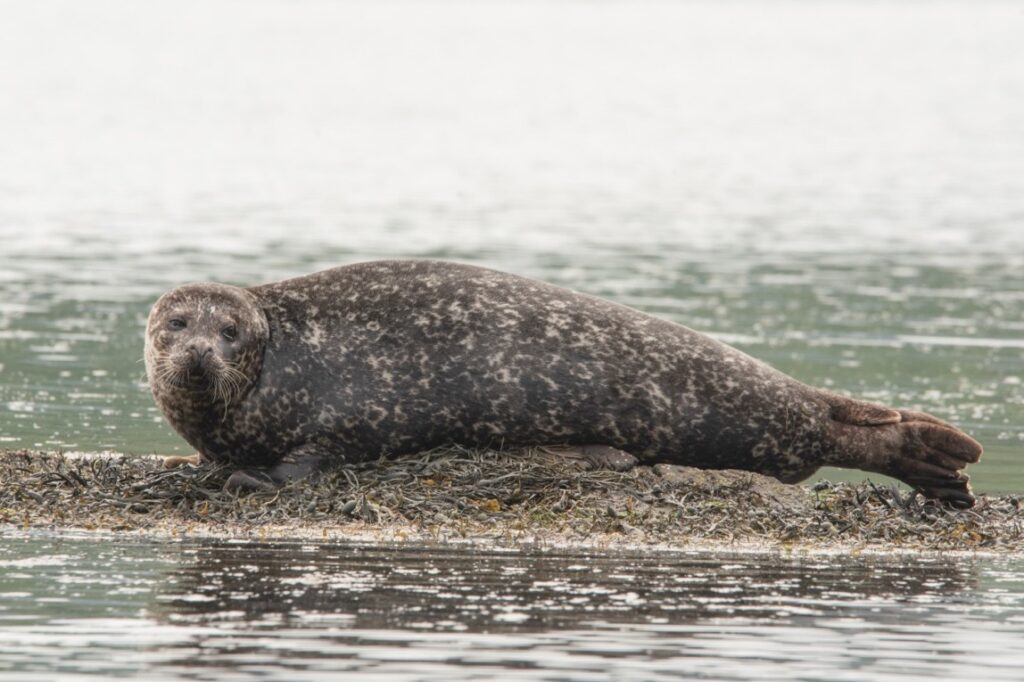
Harbour seals live for 20-30 years, and are about 1.5m in length. They weigh 80-100kg.
Females breed from 3-5 years and males from six years of age.
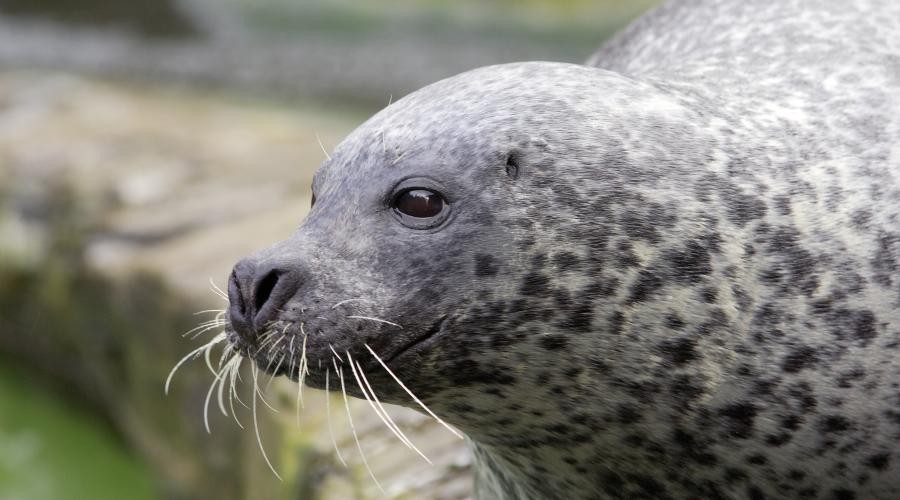
The Harbour Seal, or Common Seal.
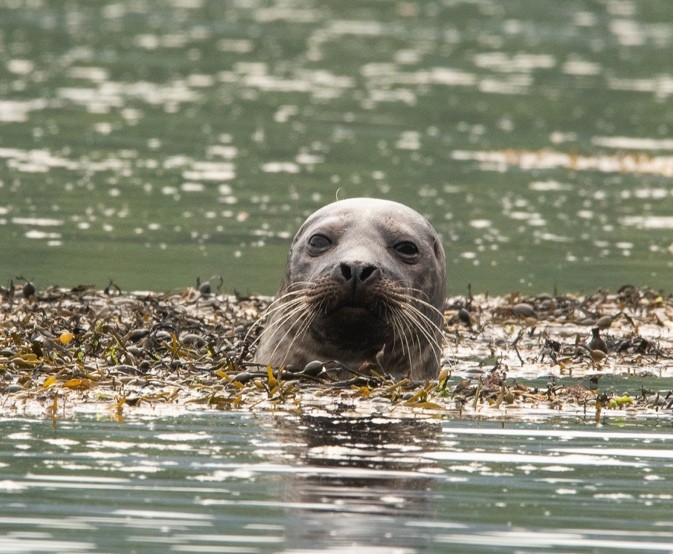
The seal we are most likely to see in the Sound of Jura is the common seal, also known as the harbour seal. Ironically this is not as numerous as the grey seal, which is the other species found in our waters.
Harbour seals have declined significantly in the last 30 years, particularly in the Northern Isles and east coast of Scotland. About 80% of Scotland’s 37,000 harbour seals live on the West coast. This decline is being investigated by the Sea Mammal Research Unit, at the University of St. Andrews (https://www.smru.st-andrews.ac.uk/).
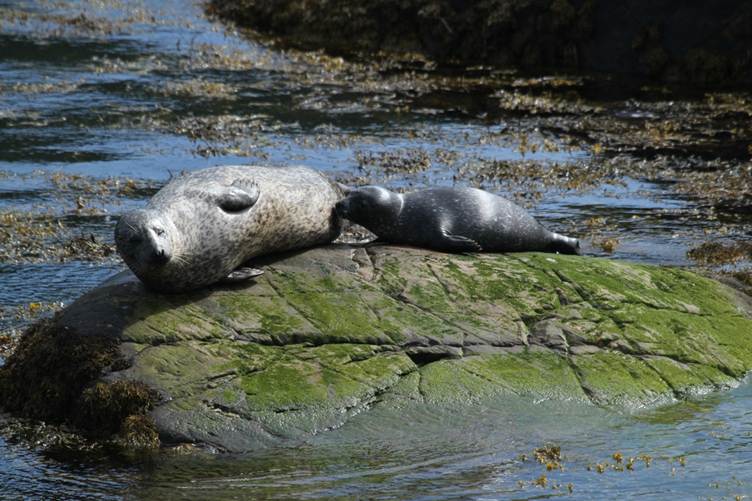
Harbour seals are frequently seen singly or in small groups, hauled out on rocks in the sheltered waters where they breed. Characteristically they lie with their heads and tails up, in a “banana pose”. They feed up to 50km from these sites. Their diet includes sand eels, whitefish, flatfish and herring. Harbour seals feed at shallower depths than grey seals (20-100m), staying submerged for up to 30 minutes, although the average dive lasts just three minutes. Incredibly they have been recorded diving to depths of 600m.
Harbour seals breed in June/July, often returning to the site that they were born. Their pups actually moult their coat in the uterus and can swim almost immediately after being born.
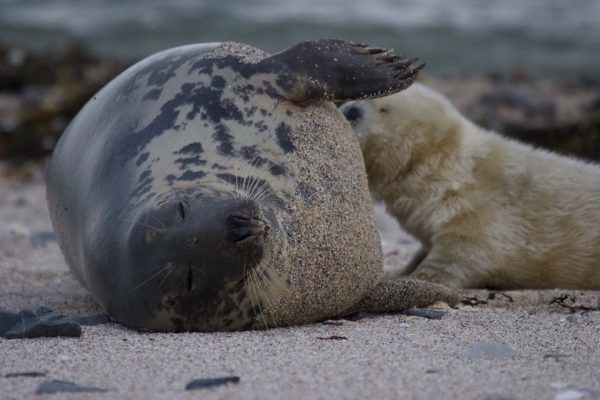
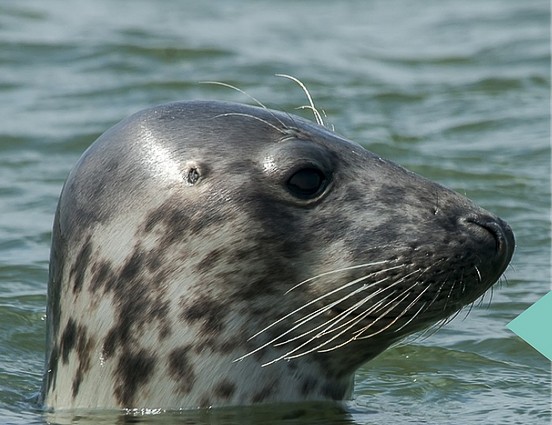
The grey seal
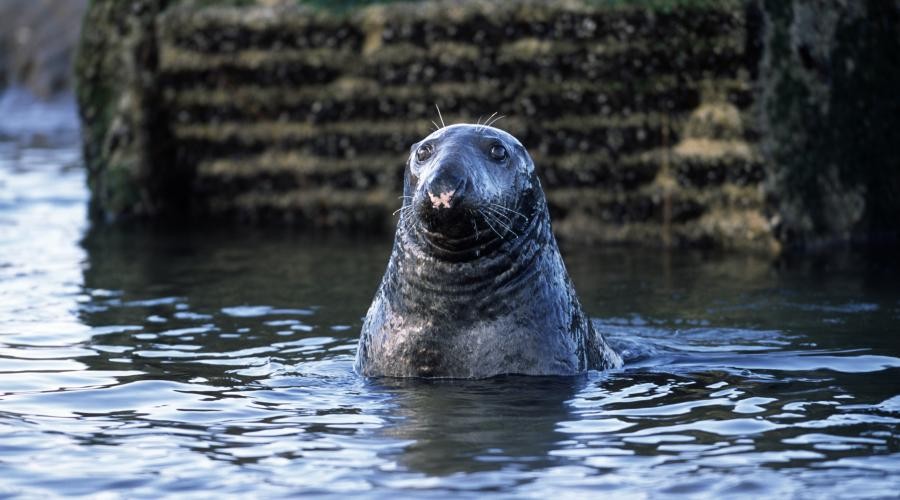
The rugged coastlines, rocky islands and sheltered bays of the west coast of Scotland are ideal haul-out sites for this species. Unlike harbour seals, grey seals gather to breed in colonies, for example on several of the islands in the Sound of Jura.
Grey seals weigh 200-300kg and are larger than harbour seals, at 2-2.5m long. They are less commonly seen in the Sound but are more numerous overall, with a current estimate of 106,300 in Scotland- about 40% of the world population. Numbers are increasing due to conservation measures. Grey seals eat 4-6kg of prey a day, primarily fish (cod/herring and mackerel), squid and other small marine creatures. They dive to depths of around 70m (a maximum of 300m) and can hold their breath for up to 20 minutes.
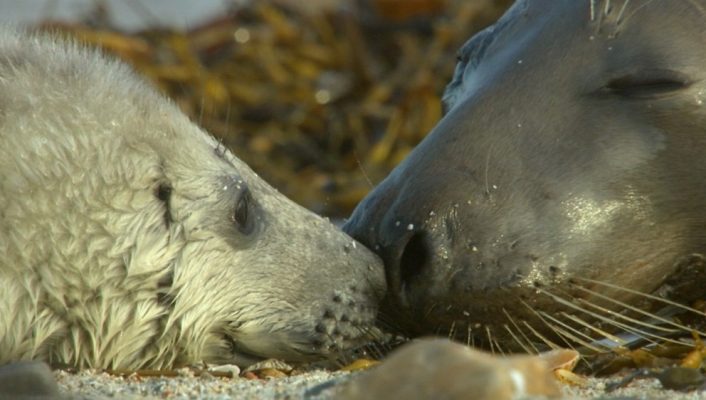
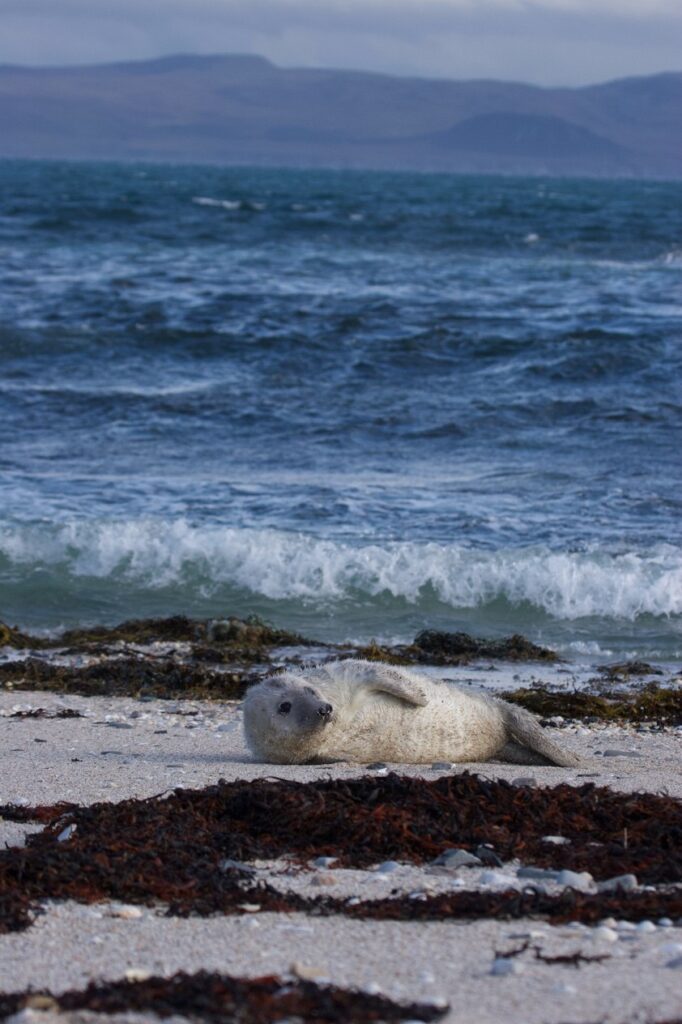
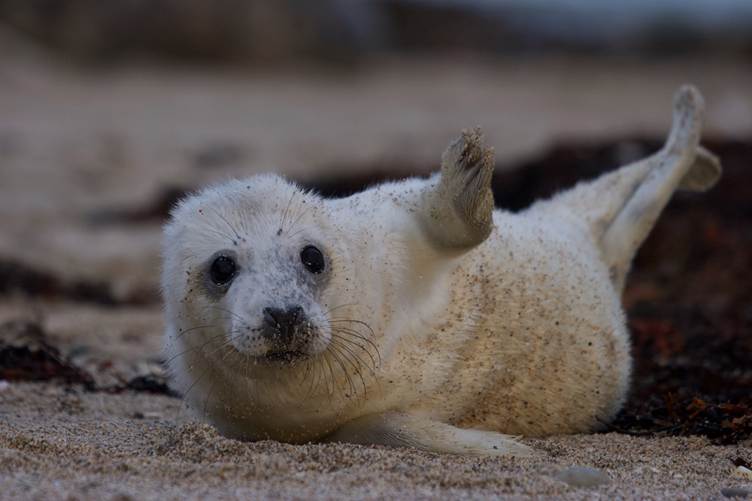
Grey seals return to their breeding colonies in the autumn, to give birth and mate. Males establish territories and defend their harems, mating with the females shortly after they have given birth. Unlike harbour seals, grey seal pups cannot swim at first, as their distinctive white coat is not waterproof and must be moulted before they go to sea. Grey seals live for 20-30 years, reaching sexual maturity at 3-5 years in females and six years in males.
Seals were granted legal protection in 1970, after years of persecution.
This has had a dramatic effect on their numbers, but seals do still face threats, some of which are highlighted below.
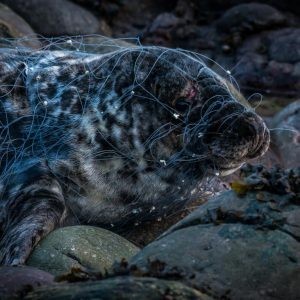
Thanks to BDMLR for permission to use this image
Pollution
Industrial and domestic waste running off into rivers and the sea can contain heavy metals which are absorbed by species lower in the food chain. These are subsequently concentrated as they pass up the food chain, reaching persistent peak levels in apex predators, such as marine mammals. For example, this has been a significant factor in the extinction of the west coast Orca population, a separate and distinct “ecotype” which, through breeding failure, now only consists of two aging males.
Pharmacological pollution, such as hormones and microplastics, entering the sea can also affect the reproductive function of many species.
Agricultural runoff can also impact the food chain, resulting in an excess of nutrients that causes some species to bloom, leading to significant imbalance in the ecosystem and to the release of toxins by some kinds of algae.
Marine litter can be ingested accidentally, or can physically injure animals. Discarded fishing line and “ghost nets” from commercial fishing remain a threat to seals, as well as to other marine mammals and birds.
Disturbance
The Seal Research Trust (https://www.cornwallsealgroup.co.uk/) has found that seal behaviour at haul outs was adversely affected on 68% of occasions when humans were present. Disturbance can cause seals to abandon good areas for less well-suited sites, and may disrupt their rest periods and maternal/pup bonding and feeding.
The RSPCA recommend keeping a distance of 100m when observing seals.
Climate change
Warming oceans can encourage toxic algal blooms, which can harm seals by affecting their nervous system, as well as killing the fish they depend on.
The increasing frequency of storms, due to climate change, disrupts fishing gear, further increasing the risk of entanglement.
The RSPCA recommend keeping a distance of 100m when observing seals.
We use cookies to ensure that we give you the best experience on our website. If you continue to use this site we will assume that you are happy with it.