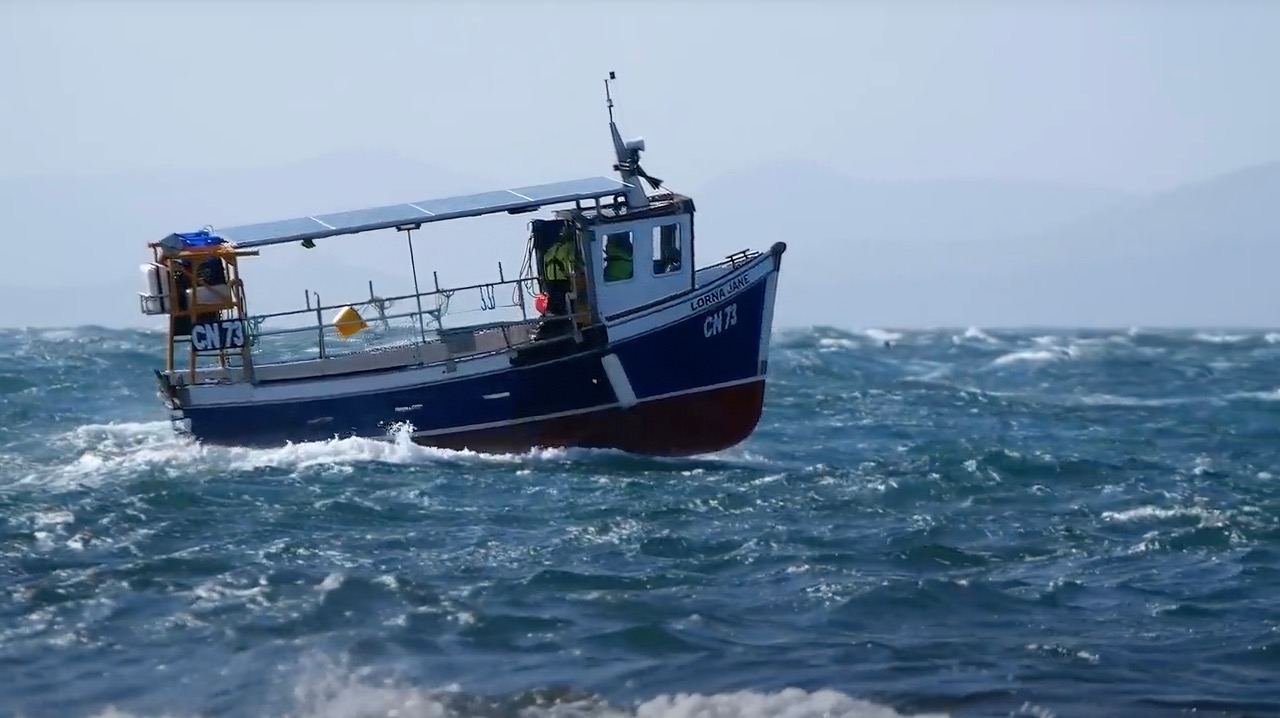
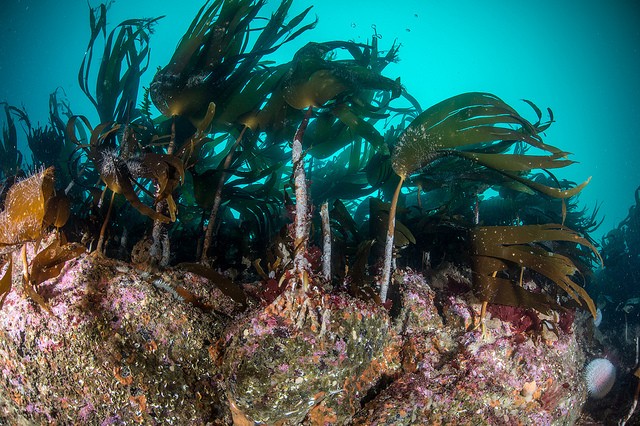
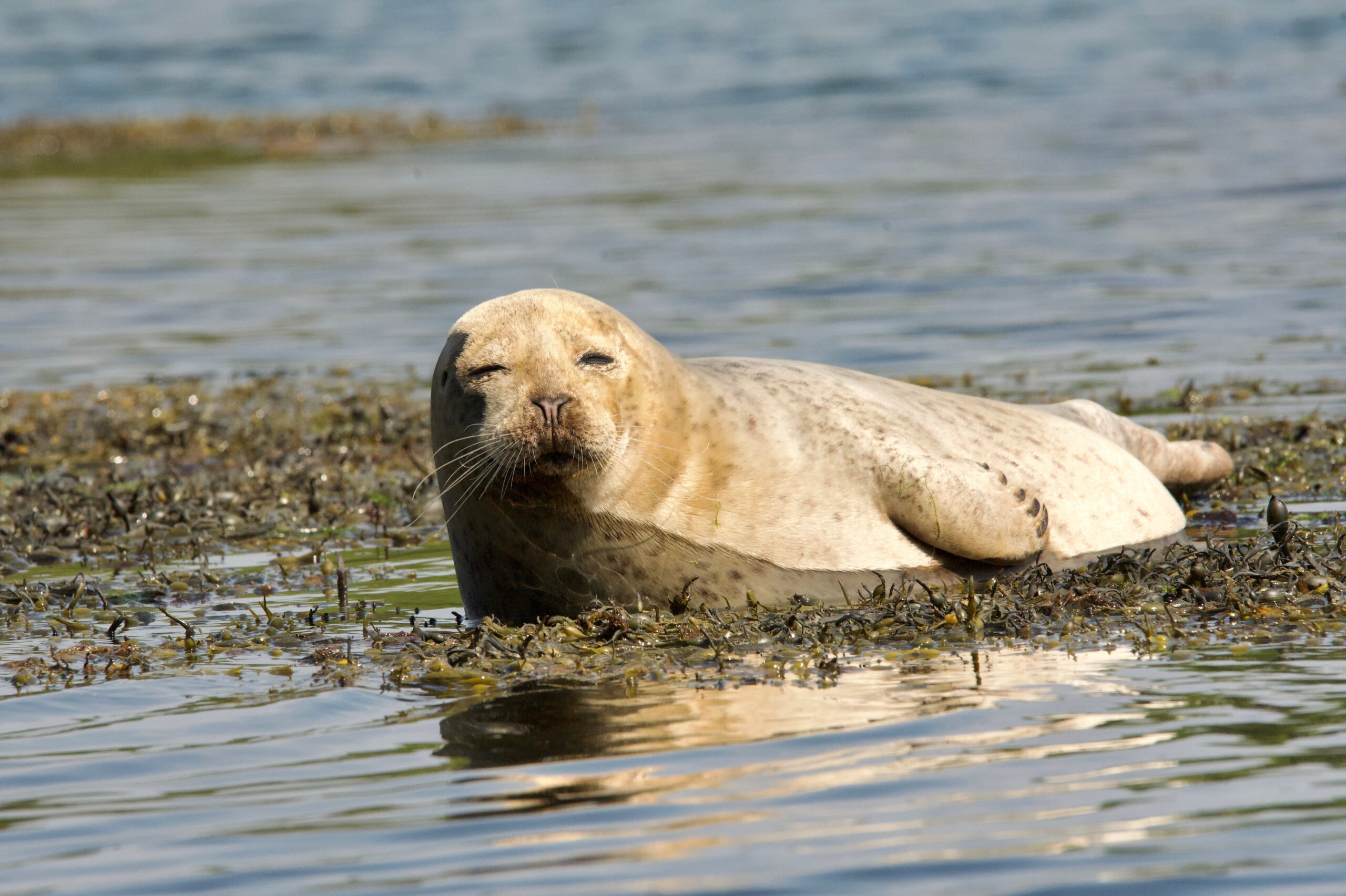
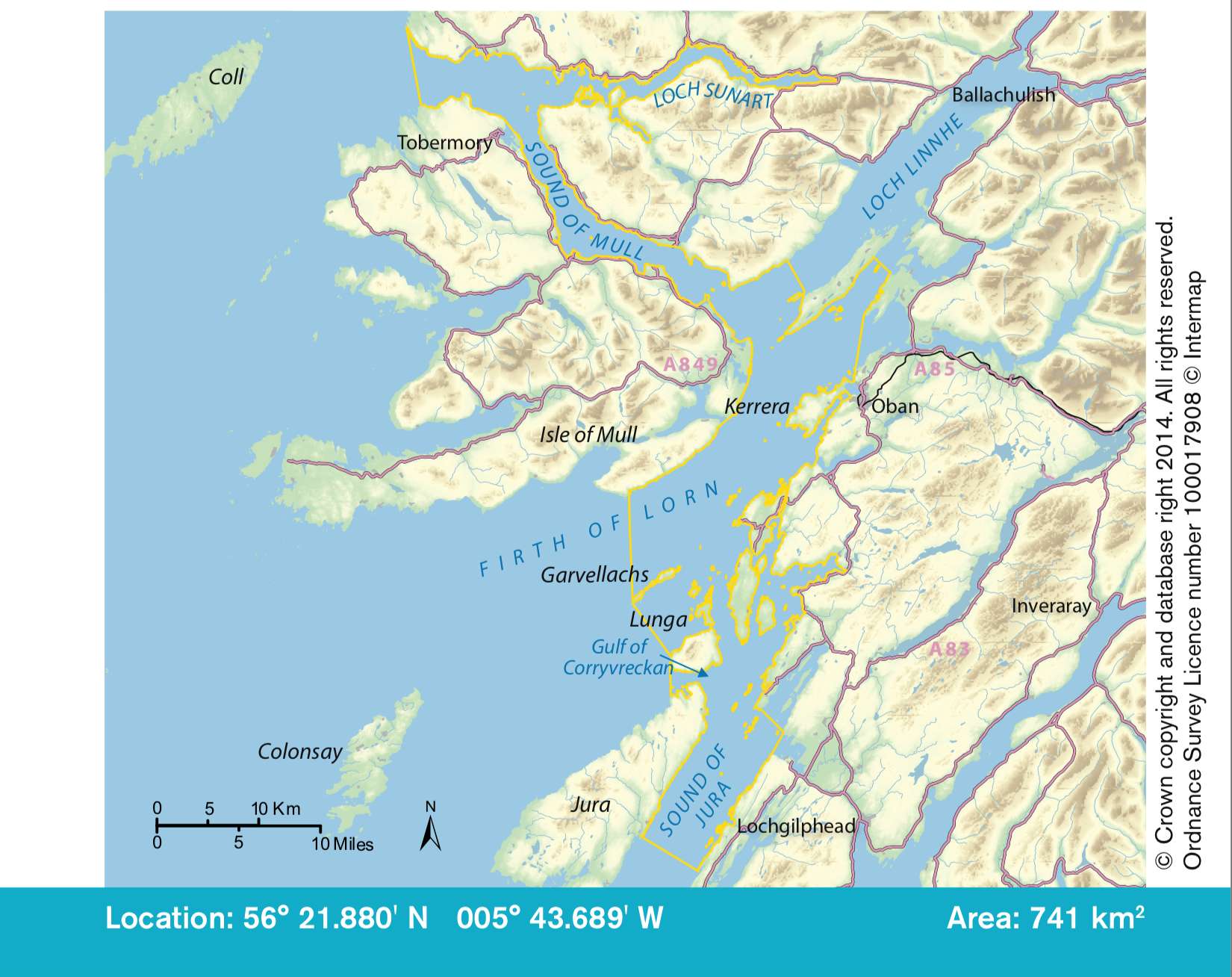
The Sound of Jura is the strait between the mainland of Argyll on Scotland’s West coast and the Island of Jura. It about 30 miles long and relatively narrow at 3-5 miles (5-8km) wide and with depths of up to 200m, huge underwater cliffs and enormous pinnacles contribute to strong and varied currents, with large upwelling’s bringing food from the depths to the surface.
Minke whale, The Sound of Jura
Harbour porpoises, The Sound of Jura
The Sound of Jura is part of the Sound of Jura to Loch Sunart Marine Protected Area and Loch Sween is a designated Marine Protected area in its own right.
Marine Protected areas (MPA) are legally defined areas where specific activities may be restricted or managed to protect natural features.
The Sound of Jura is also part of the Inner Hebrides and Minches Special Area of Conservation (SAC) for Harbour porpoises.
This area supports up to 5000 individual harbour porpoises and is the largest protected area for this species in Europe.
To campaign more widely for marine conservation and the sustainable use of the sea we all share.
To raise awareness in our community and beyond of issues affecting life in the sea and its sustainable use.
To preserve and enhance the outstanding natural diversity in the area of the Sound of Jura and Loch Sween
To seek closer engagement with individuals and organisations whose actions impact on our marine environment and to represent our communities opinions on this
To educate future generations on the need for marine conservation and the importance of sustainable fishing.
Loch Sunart to the Sound of Jura MPA
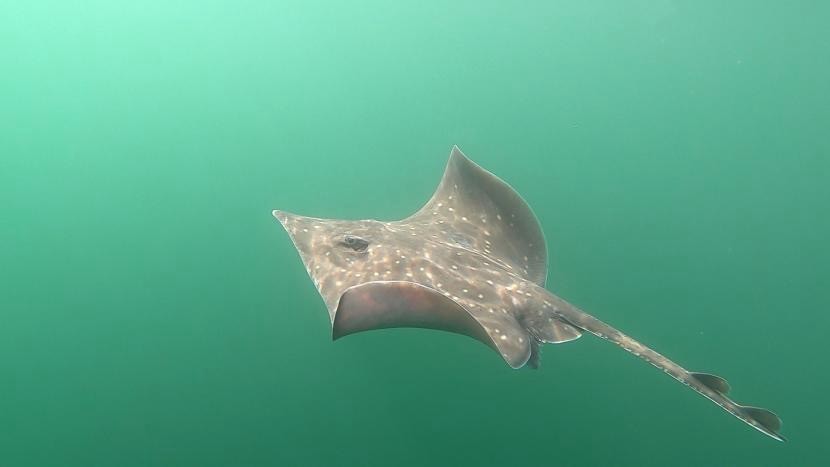
This was established to protect the Flapper skate that live here. These are categorised by the International Union for the Conservation of Nature as “critically endangered” making them among the rarest animals in the world along with the Sumatran rhino and mountain gorilla. These have a high risk of extinction because of the rate of their decline.
With thanks to NatureScot for permission to use this map
The Flapper skate is the worlds largest skate with females growing to three metres in length and weighing over 200kg. It can be found in depths of 10 to 200m. Tag and release research in the Sound of Jura has shown that they are remarkably site faithful with individuals been found year after year in the same spot. They are very long lived (possibly fifty years) and breed in this area as shown by their beautiful gold coloured egg cases, the worlds largest “mermaids purses”. Historically it has been overfished and populations collapsed in the 20th Century.
With thanks to NatureScot for permission to use this Image
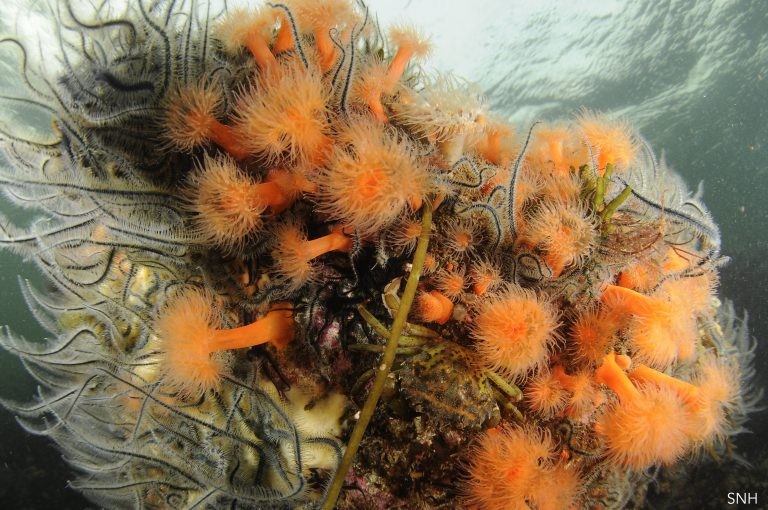
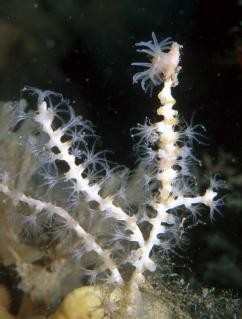
Many other rare animals live in the Sound of Jura including the beautiful colonial animal the Northern sea fan. These are related to corals. Each polyp in the colony looks like a small anemone. It uses its small tentacles to catch food passing in the current. We find it often grows alongside a rare community of sponges, including the prawn cracker sponge.
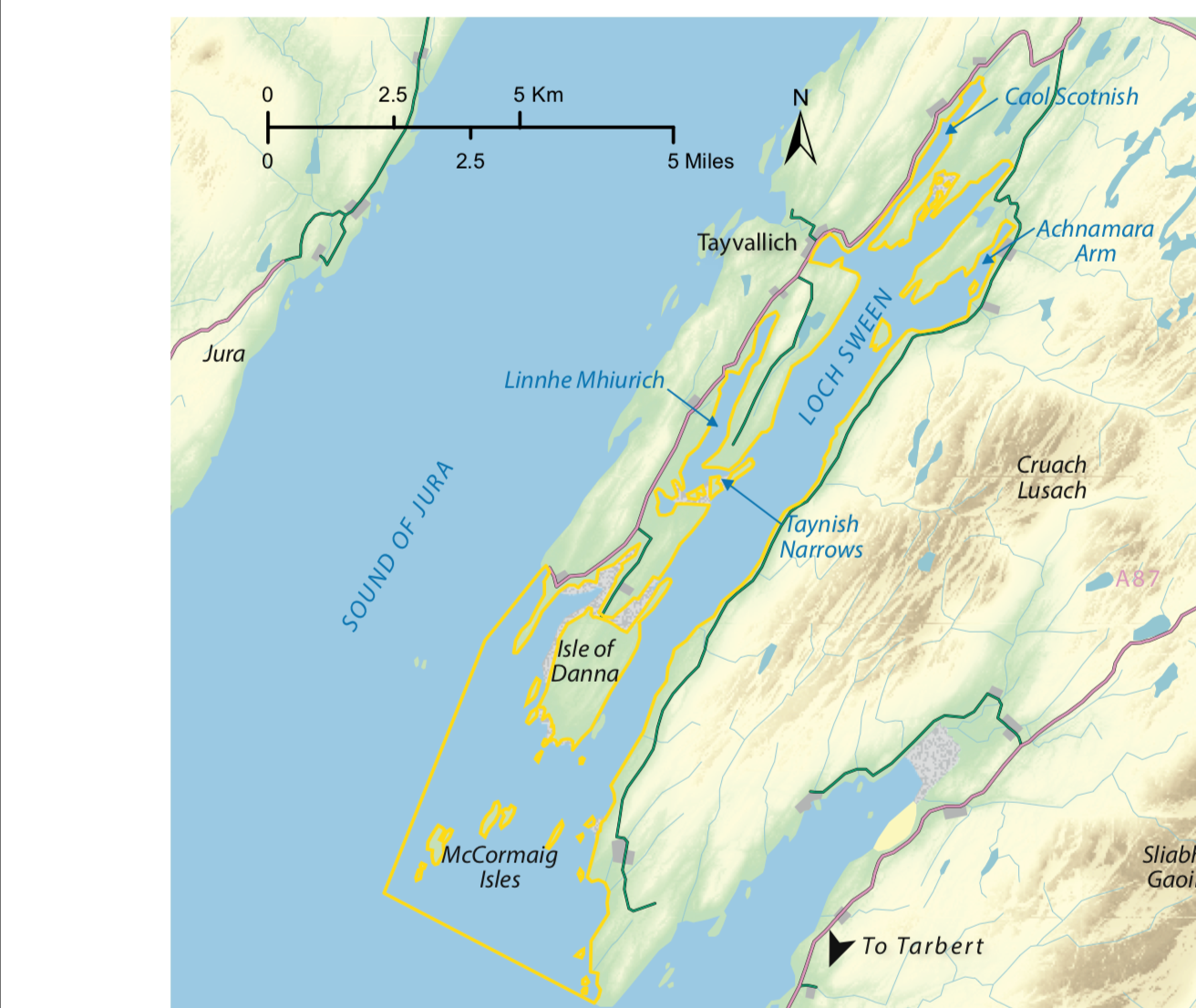
Loch Sween connects to the Southern end of the Sound of Jura but is a separate designated MPA. This was created because the Loch has a rich variety of sea bed types offering habitat to many rare animals. This includes the tidal rapids at Taynish and the tide swept waters around the McCormaig Isles, to the still waters of Caol Scotnish and Linnhe Mhurich .
Loch Sween is one of Scotland’s most important populations of native oyster and has sea grass meadows and Maerl beds. It has four priority features:
Maerl is a purple/pink seaweed that forms spikey underwater carpets on the seabed. As a type of coralline algae, maerl deposits lime in its cell walls as it grows forming a hard, brittle skeleton which creates a 3D habitat in which other species such as feather stars, scallops sponges and fish can shelter.
Maerl beds are highly sensitive to physical disturbance. Being a three dimensional structure they support a variety of animals including serving as protection for young fish but are vulnerable to crushing, burial and sedimentation. Maerl have a negligible rate of recovery due to their exceptionally slow growth rate.
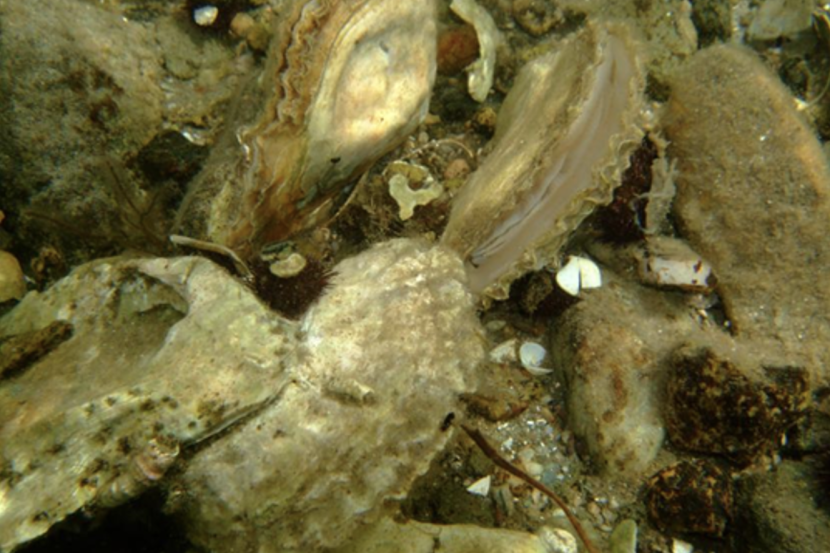
Native Oyster beds create reefs providing 3 dimensional habitat and shelter for crabs, fish, worms and other invertebrates. Growing up to 11cm long they can live for up to 15 years although average lifespan is 5-10 years. Feeding is carried out by pumping water through a filter in the gill chamber removing suspended organic particles. Particulate matter which is re-suspended from the bottom material by tidal currents and storms is likely to be an important food source and they are believed to filter up to 5 litres/hour (120 litres per day).
When in dense reefs the combined filtration will significantly improve water clarity, removing plankton and even some pollutants. They are highly sensitive to introduced diseases and these have been the cause of mass mortality in European oyster beds. They are sensitive to the impacts of introduced species such as American Oyster Drill and the Slipper Limpet which compete for space and smother it. They are highly vulnerable to low levels of siltation as they are easily smothered and cannot change their position on the seabed.
This habitat occurs in very sheltered, fine sediment environments rich in organic matter
Home to Volcano Worms (Maxmuelleria lankesteri) which live in burrows up to 2m in length beneath the seabed. These burrows form small mounds of sediment resembling miniature volcanoes. They share this habitat with Norway Lobsters, Shrimps and Burrowing Gobies.
This habitat is extremely sensitive to physical disturbance, changes in water flow and accumulation of silt, all of which can damage its species directly or reduce its diversity. This habitat only occurs in areas of weak tidal streams.
The Fireworks Anemone is a large burrowing anemone, occupying a tube-like burrow that may exceed one metre in length.. The tentacles are incapable of retraction but may coil spirally on disturbance. It feeds on plankton that it catches in its 30cm long tentacles. It is not known how long they live for or details of their breeding cycle.
The MPA also includes the Sound of Jura at the mouth of the loch that surrounds the Isle of Danna and McCormaig Isles,The seabed here experiences powerful tidal currents which results in the formation of coarser sediments.
Credit NatureScot
Brittle stars are an essential part of this ecosystem acting as seafloor engineers gently mixing sediment helping oxygenation, often forming dense aggregations on the sea bed giving physical protection for other species and being a vital food source for starfish/crabs/lobsters/fish and some seabirds
Credit NatureScot
Slender seapen ( a type of marine animal belonging to the same group as jellyfish,corals and sea anenomies, they look like old fashiones quill pens , have a central stalk and feathery branches lined with tinypolys. Each seapen is a colony of polyps working in harmony some feeding, others circulating water and others reproducing. They anchor to the soft ocean sediment and can exhibit bioluminescence when disturbed as a defence mechanism to startle predators. They are filter feeders using tentacles to catch plankton and microscopic particles
With thanks to Sue Scott
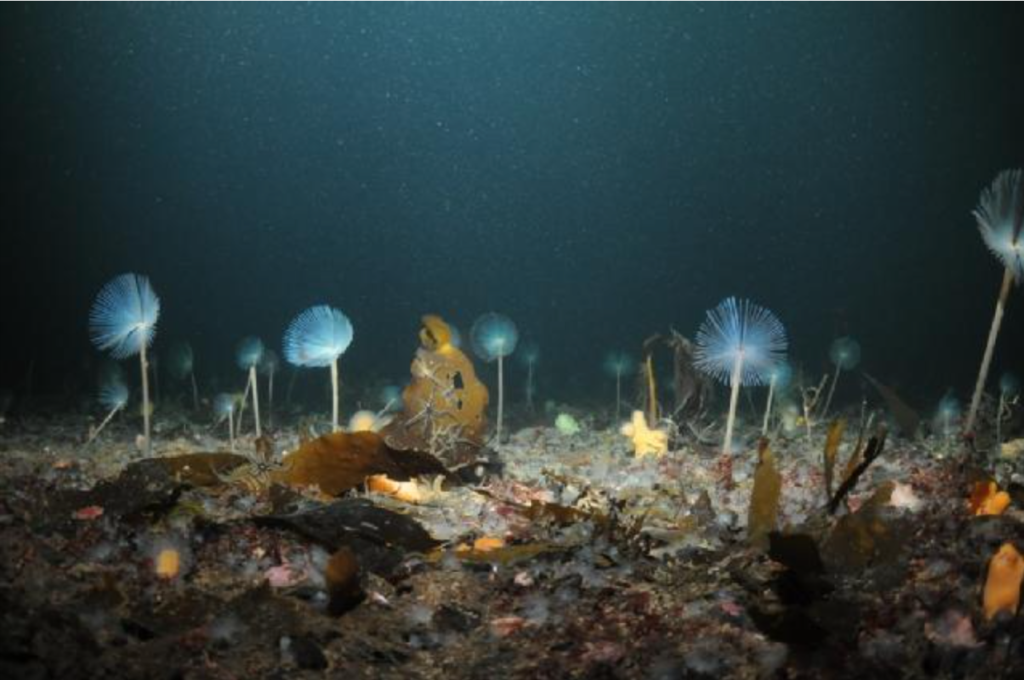
A dense and biodiverse flame shell bed with peacock worms
Flame shells are habitat engineers, creating reefs by binding together stones, shells and other debris. They support hundreds of species including crabs, lobsters, juvenile fish and other bivalves. Feeding on plankton, they increase water clarity.
Loch Sween MPA is surrounded by many other sites of special scientific interest (SSSI) including Taynish woods, Linne Mhuirich and Taynish and Knapdale NSA and Tayvallich Juniper and coat Special Area of Conservation (SAC)
We use cookies to ensure that we give you the best experience on our website. If you continue to use this site we will assume that you are happy with it.